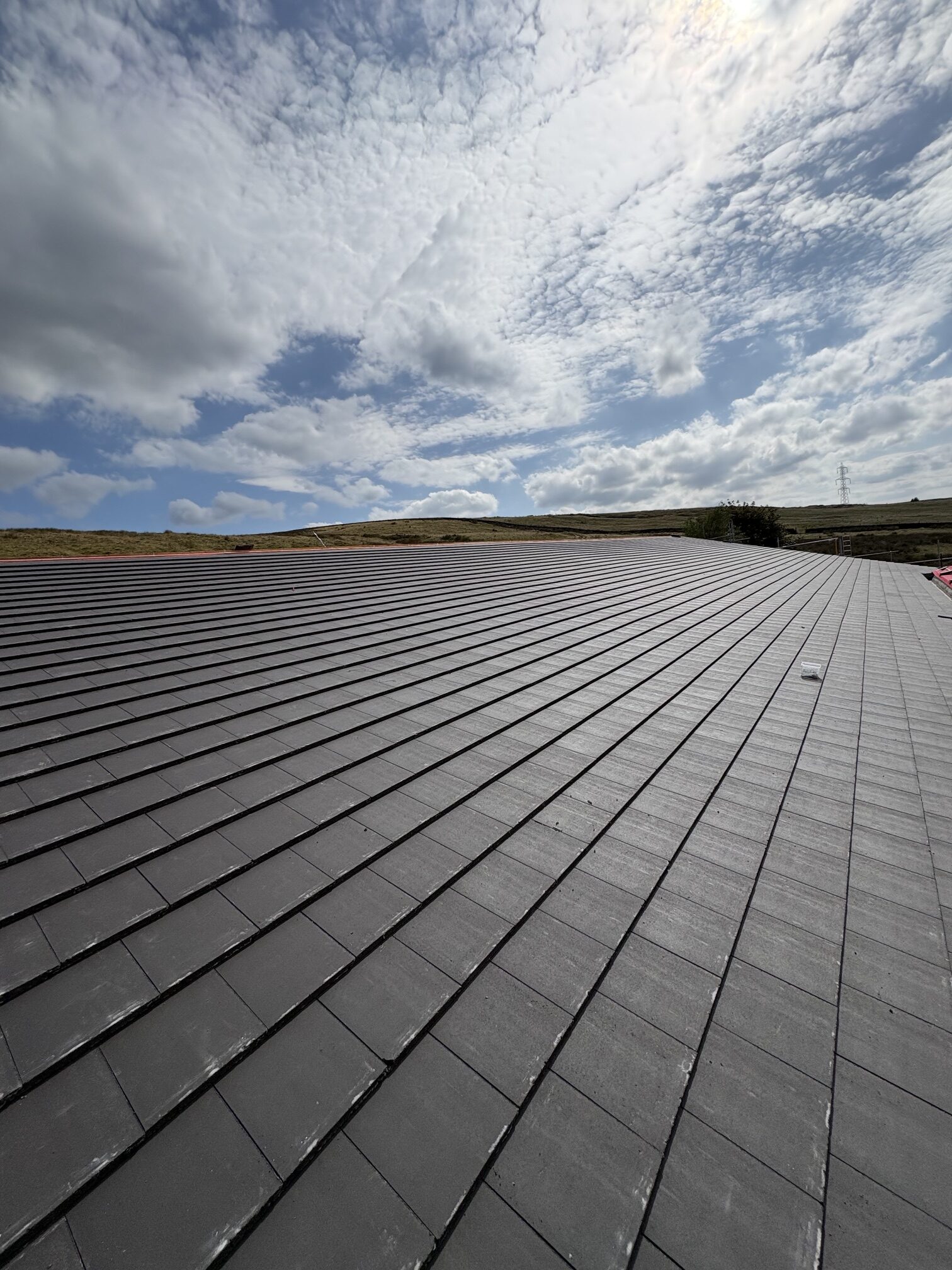
A leaking or weathered commercial roof does not automatically need to be stripped and replaced. Where the existing roof is suitable, a liquid waterproofing system can create a seamless protective layer over the surface, address complex details and extend the serviceable life of the roof with less disruption than a full replacement project.
Liquid systems can be used on a range of flat, pitched and metal roofs, as well as balconies, walkways and difficult junctions. The success of the project depends on survey, preparation and correct specification. It is not simply a matter of applying a coating over an unresolved problem.
What is a liquid waterproofing system?
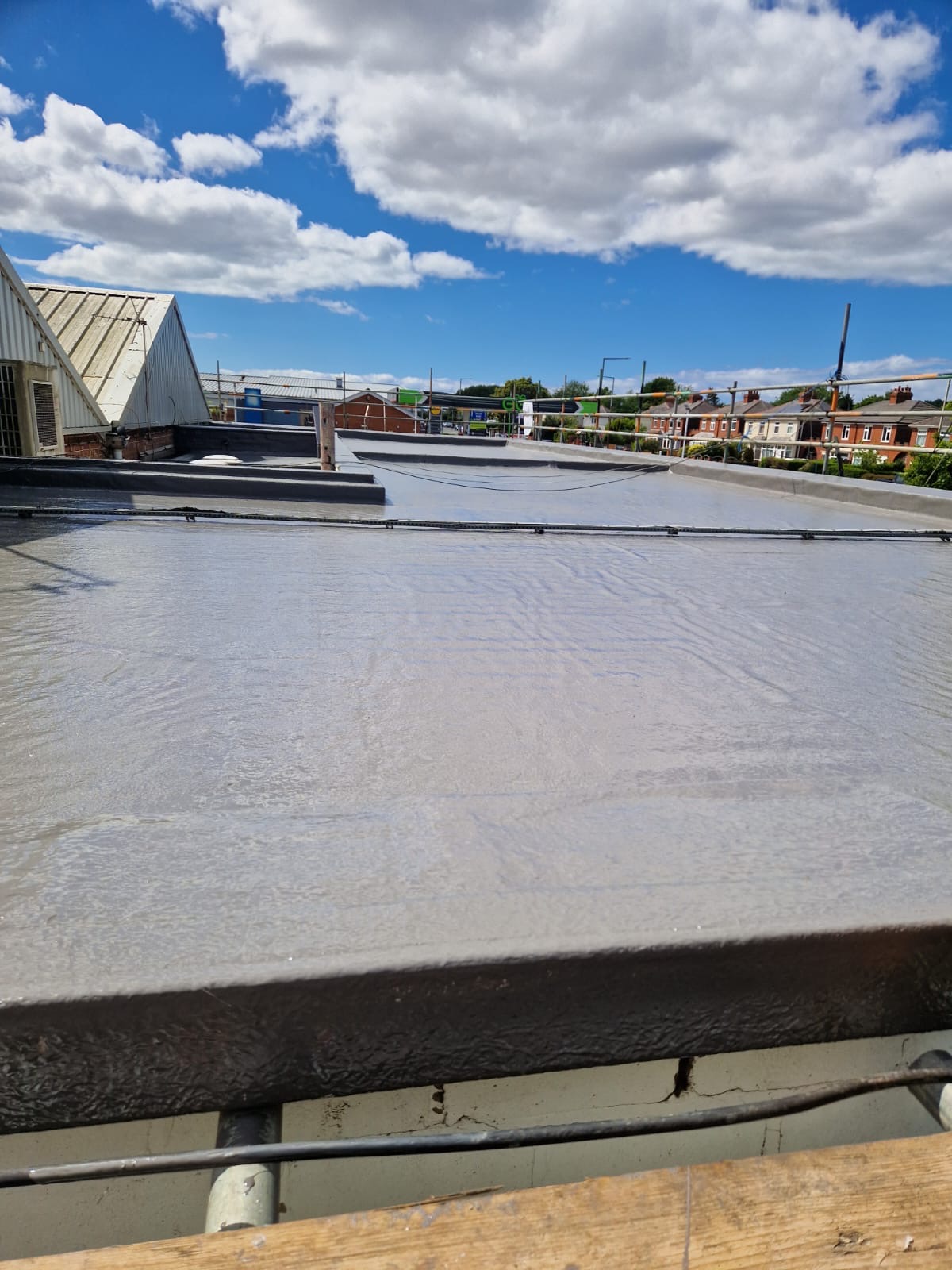
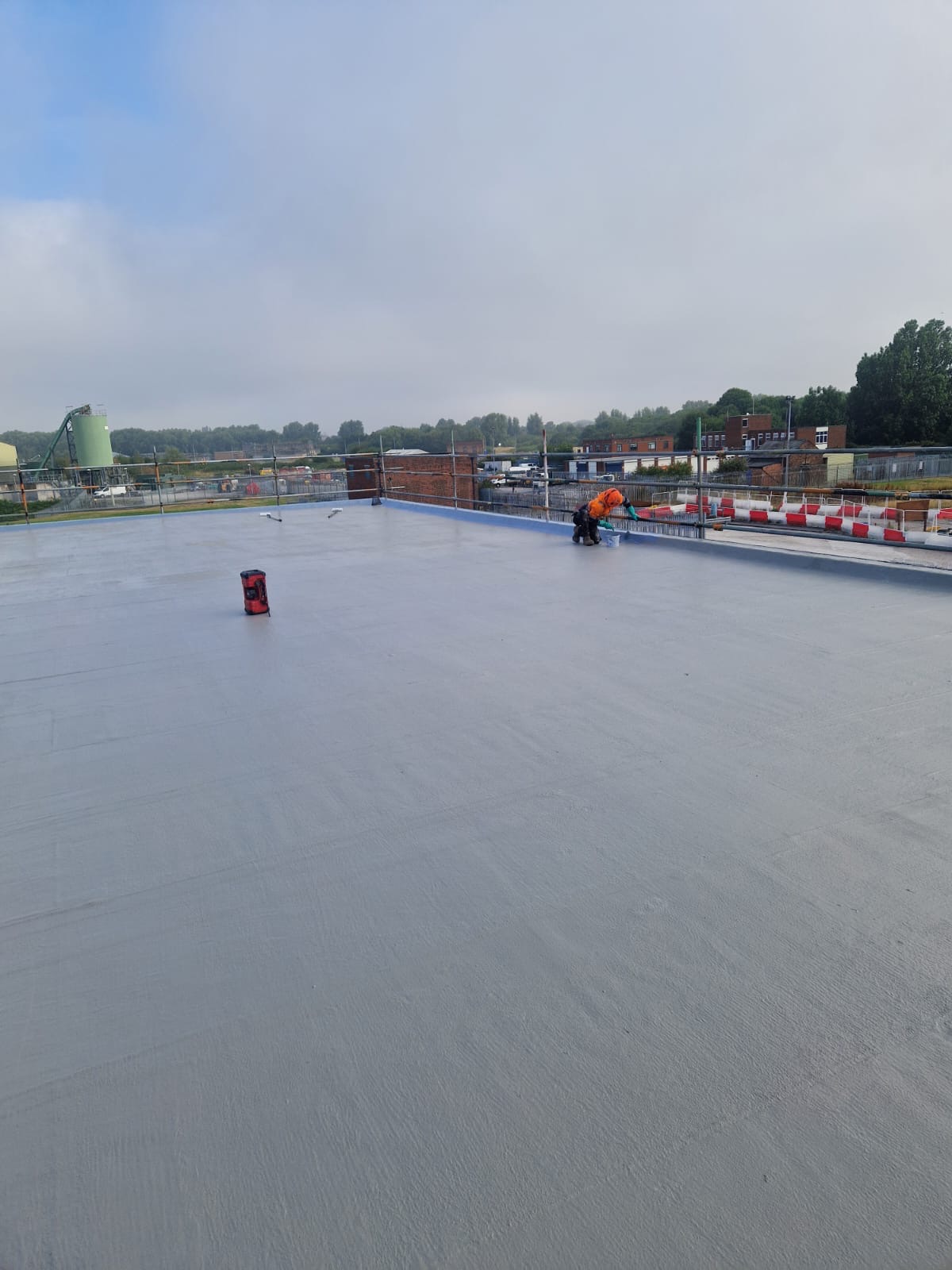
Liquid waterproofing is applied in a fluid form and cures to create a continuous membrane. Depending on the selected system and roof condition, reinforcement may be incorporated across the whole area or at specific details. Because the finished layer is seamless, it can be particularly useful around upstands, rooflights, outlets, penetrations and changes in level.
Many commercial liquid systems are cold applied. This can reduce the need for hot works and may simplify installation on sensitive or occupied sites. Every building still requires its own method statement and risk assessment, and the product must be appropriate for the existing substrate and intended use.
Which roofs can be suitable?
Liquid waterproofing is versatile, but suitability must be confirmed by inspection. Systems may be considered for:
- Existing flat roof membranes requiring refurbishment
- Pitched or low-pitched roof areas with complex detailing
- Metal roofs affected by weathering or localised corrosion
- Rooflights, gutters, outlets, penetrations and difficult junctions
- Balconies and walkways requiring a waterproof finish
- New roof areas where a seamless system is preferred
- Local repairs that need to integrate with the surrounding roof
Before specification, the contractor should assess moisture within the existing build-up, adhesion, drainage, movement, contamination and the condition of the substrate. Wet insulation, structural defects or extensive corrosion may require remedial work before a waterproofing layer can be installed.
Five ways liquid waterproofing can extend roof life
1. It creates a seamless weatherproof layer
Joints and laps can become vulnerable areas in some ageing roof systems. A correctly installed liquid membrane forms a continuous surface across the treated area, reducing the number of interfaces where water might enter.
2. It accommodates complex roof details
Commercial roofs often contain plant, pipes, rooflights, outlets and multiple upstands. Liquid application can follow irregular shapes and tightly detailed areas that would be difficult to cover neatly with rigid materials.
3. It can support refurbishment rather than premature replacement
Where the existing roof remains suitable, an overlay approach may retain serviceable materials and reduce the scale of strip-out. This can save time and minimise waste, although it should only be chosen after the existing build-up has been properly assessed.
4. It can reduce disruption to the building below
Refurbishment can often be planned while the property remains operational. Avoiding a complete strip may reduce exposure of the building, noise and disruption. Site access, odour, curing times and weather conditions must still be managed carefully.
5. It can protect vulnerable metal roof details
Liquid coatings can form part of a planned treatment for metal roof weathering, local defects and cut edge corrosion. Preparation is critical: corrosion must be treated appropriately, loose coatings removed and fixings or sheets repaired where necessary before the protective system is applied.
When is liquid waterproofing not the whole answer?
A liquid system cannot compensate for every underlying defect. If the deck is structurally unsound, insulation is extensively saturated, falls are inadequate or movement exceeds the capability of the proposed system, more substantial work may be required. Applying a coating without correcting these issues can conceal deterioration rather than solve it.
Ponding water also needs careful investigation. The cause may be blocked drainage, settlement, inadequate falls or local deflection. A waterproof membrane can protect the surface, but drainage and structural issues should be considered as part of the same project.
What should a commercial roof assessment include?
- The type, age and general condition of the existing roof
- The location and probable causes of leaks
- Adhesion and compatibility with the proposed system
- Moisture within insulation or the roof build-up
- Condition of outlets, gutters, flashings and penetrations
- Evidence of movement, corrosion or structural deterioration
- Access, edge protection and site operating requirements
- The preparation, reinforcement and finish required by the specification
The finished system is only as reliable as the preparation beneath it. Cleaning, drying, priming and local repairs should follow the manufacturer’s requirements and the approved specification. Details should be installed methodically rather than treated as an afterthought.
How to choose the right liquid roof system
There is no single coating that suits every roof. The correct choice depends on the substrate, expected movement, exposure, traffic, detailing and performance required. Warranty conditions, installer approval and future maintenance should also be reviewed before the project starts.
A competent contractor should explain why a particular system has been selected, what preparation is included and which defects fall outside the waterproofing scope. A clear proposal makes quotations easier to compare and reduces the risk of gaps between the survey, specification and installation.
Discuss commercial liquid waterproofing with Maincoat
Maincoat Ltd provides liquid systems for new roofs, refurbishments and repairs, including balconies, walkways, encapsulation, metal roof coatings and cut edge corrosion work. With more than 25 years of experience, the family firm supports clients across the North West and throughout the UK.
Explore Maincoat’s liquid waterproofing systems, or call 01772 679 680 for advice on a leaking or ageing commercial roof.

Frequently asked questions
Can liquid waterproofing be applied over an existing roof?
Often it can, provided the existing roof is stable, suitably prepared and compatible with the specified system. A survey and any necessary adhesion or moisture checks should be completed first.
Are liquid roof systems suitable around rooflights and plant?
Yes, their ability to follow complex shapes makes liquid systems useful around many penetrations and upstands. These details require careful preparation and reinforcement in line with the specification.
Can a liquid system repair a leaking metal roof?
It can form part of the solution where the sheets and structure remain serviceable. Corrosion, fixings, laps and damaged sheets must be assessed and treated before the waterproof layer is applied.
How long does liquid waterproofing last?
Service life depends on the chosen system, substrate, installation, exposure and maintenance. The contractor should provide the relevant product specification and warranty information for the proposed project.